
- MODULAR KITCHEN
- MODULAR WARDROBE
- MODULAR FURNITURE
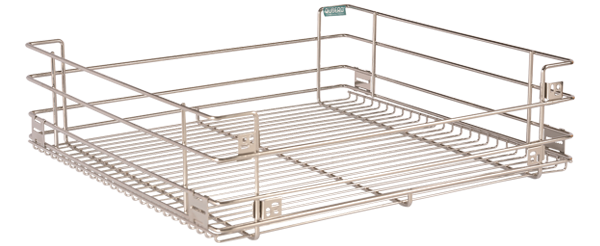
- ASTRID
Available in various sizes
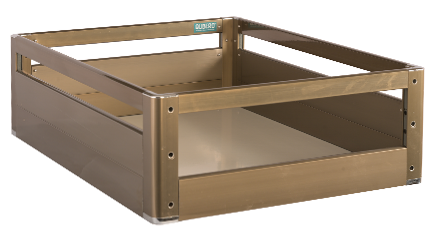
- EROS
Available in various sizes
- MIDWAY LINEAR
Available in
various sizes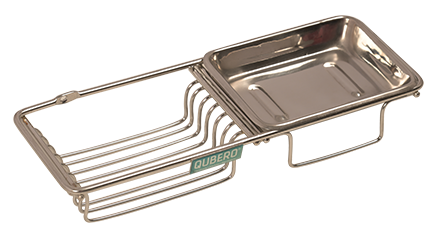
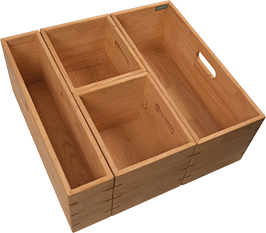
- ADD ON
Available in various sizes
- ALETA HARDWARE
Available in various sizes
- KLENOX UTILITY

Modular Furniture vs Carpenter-Made Furniture in 2026
January 15, 2026
Modular Kitchen Cost in 2026: Price Breakdown, Factors & Budget Guide
February 20, 2026
Best Kitchen Colours for Indian Homes 2026: Trends, Combinations & Finishes
Choosing the best kitchen colours for Indian homes 2026 is no longer an intuitive, trend-driven choice alone; it now needs an understanding of spatial perceptual modulation, cognitive colour behaviour, and modular surface finishes. Colour is a functional attribute in the domain of kitchen design engineering that affects not only visual perception and ergonomic lighting adjustment but also thermal comfort. The kitchen colour trends 2026 India are changing; palettes are no longer only about aesthetics but are engineered to optimise light reflection, material coherence, and the cultural context in high-use environments.
1. Colour Theory Meets Operational Kitchen Dynamics
The kitchen colour selection in 2026 takes the form of a colourimetric principle, which is consistent with the performance metrics, including:
- Spectral reflectance: Establishes the interactions of surfaces with the daylight and LED lights.
- Contrast coefficient analysis: Enables visual clarity at work zones (e.g., hob, sink, prep counters).
- Temperature biasing: Cool vs warm stimuli to control mood and spatial perception.
These metrics support many modular kitchen colour ideas that architects and designers apply to Indian homes. A well-engineered palette balancing works well, with space perception and cultural symbols.
2. 2026 India’s Foundational Kitchen Colour Trends
The trending kitchen colours 2026 in India show a calculable pivot from utilitarian whites to palettes rooted in biophilic and natural analogues, which provide a more precise, stable visual experience. The following trends could be divided into 3 technical levels:
A. New Neutral Foundations
Warm neutrals prevail as foundational cabinet and wall colours:
- Warm greige —a combination of grey and beige with thermal comfort features.
- Taupe & mushroom —high chromatic depth, and not as fatigable to vision.
- Creamy off-white — designed to get as much light into a small kitchen as possible.
Engineered lighting systems, such as linear LEDs and task luminaires, perform optimally against these warm neutrals by reducing glare and provide balanced colour rendering index (CRI).
B. Earth-Linked Chromatic Trends
The natural and gentle tones indicate an affinity with organic elements:
- Olive and sage greens — biophilic hues which contribute to the process of normalising stress reactions within closed spaces.
- Terracotta and sand beige — draw from regional material palettes andadd to a more seductive feel profile.
- Subdued blues — provide spectral depth without loss of thermal richness.
Such tones are not chosen randomly; they are selected based on empirical data showing their ability to remain visible in mixed-light environments.
C. Accentuated Dark Hues
Dark, high-chromatic tones are not fading:
- Charcoal and midnight black — applied sparingly on lower cabinets or islands to stabilise the space.
- Emerald-toned deep greens — provide high-contrast focal points that do not cause visual noise.
Such hues should be used in combination with very high reflectance surfaces (e.g. light countertops) to prevent optical compression, particularly in smaller kitchens.
3. Modular Kitchen Colour Combinations: Structural Coherence
Design rules of the modern kitchen colour combinations are designed in the year 2026 that would result in maximum visual flow and spatial delineation. These combinations allow balancing psychological and physical reactions:
Triadic Modular Combinations
Creating dynamic but stable aesthetics, triadic schemes use three distinct hues based on 120° separation in colour space:
- Sage + Cream + Light Oak Wood
- Charcoal + Matte Brass + Off-White
- Emerald + Beige + Soft Grey
These are combinations in compliance with the 60-30-10 rule of spatial design — primary colour (60%) on cabinet fields, secondary colour (30%) in the workplane or appliances panels, accents colour (10) in hardware and decoration.
Functional Duotone Strategies
Duotone palettes offer clean, modular interfaces where contrasting surfaces define work zones:
- Light neutral cabinetry with subdued terracotta islands — enhances work orientation.
- Sage upper cabinets and deep olive lower bodies — keep the perceptual elevation while anchoring base units.
In spacious areas, monochromatic sequences (single hue from floor to ceiling) can contribute to the perception of volumetric space, particularly when blended with high-CRI lighting.
4. Surface Finishes and Functional Integration
Surface finish engineering is inseparable from colour logic in 2026:
- Matte finishes are better for hiding fingerprints and minimising specular spots.
- Semi-gloss lacquers are applied for high-traffic zones easy cleaning is a big necessity.
- Textured finishes are used together with the high charring and exposure to spices common in Indian kitchens.
These finishes are calibrated not just for look but for wear resistance and cleaning efficacy — which is essential in Indian cuisine where turmeric and other pigments are prevalent.
5. Contextual Considerations for Indian Homes
In addition to aesthetics, the best kitchen colours for Indian homes 2026 must consider:
- Vastu or cultural preferences —earth tones, in many instances, tend to coincide with symbolic harmony.
- Natural light penetration — darker palettes need a lighting solution.
- Spatial ergonomics — lighter hues create the perception that there is more space; darker color grounds the focus.
The key is designing a modular kitchen palette where colour logic incorporates spatial analytics, ergonomic analysis, and cultural flexibility.
Conclusion
The best kitchen colours for homes are a combination of the advanced colour theory, the need to use the colour in practical uses, and the changing cultural aesthetics. From warm neutrals that support the light optimisation to deep and sophisticated colours that anchor the compositional balance, these modular kitchen colour ideas and combinations are engineered for the best Indian kitchen looks.
